Alex's anxiety
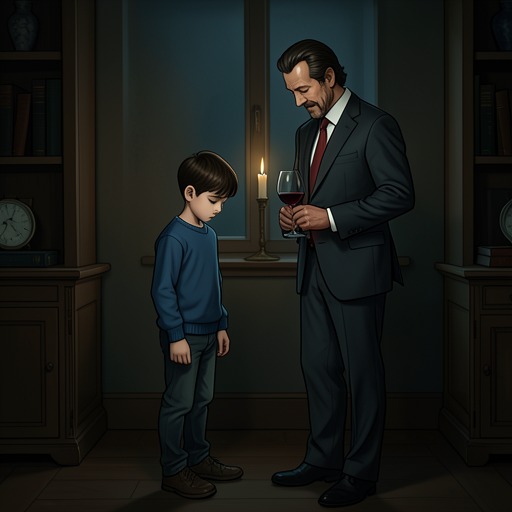
People We Meet on VacationAlex Nilsen's anxiety is presented not as a single crisis but as a recurring pressure beneath his reserved manner: it surfaces in fear of flying and death, vigilance around danger, and an effort to maintain control. The contrast between his careful public composure and his plainly voiced panic gives the state its defining shape. Poppy Wright sees both the unease and the tenderness beneath it, and responds not by dismissing his fear but by staying beside him.
Identity and Background
Alex is described as tall, broad, and habitually slouched or folded into himself, with a marked reserve that Poppy connects partly to his position as the oldest child of a widower. She describes his father as exceptionally anxious, while also linking Alex's stoicism to that family circumstance; the account does not establish that Alex's own anxiety simply derives from his father's. His repression, in Poppy's understanding, also reflects a strict religious upbringing at odds with many of his passions, including academic life. These details frame anxiety within a wider disposition toward restraint, without reducing him to fear alone.
Poppy's account holds together qualities that might otherwise seem incompatible. Alex is controlled and stoic, but also secretly strange, silly, and softhearted. His anxiety is therefore not a constant outward display. It becomes most legible when circumstances threaten his sense of safety, while his everyday reserve can conceal the effort involved in managing it.
Fear of Flying and Death
A cheap overnight flight to Sanibel Island makes that effort visible. Poppy and Alex have saved for months by taking every possible shift at their campus jobs, Alex at the library and Poppy in the mailroom, and their affordable ticket includes two layovers. Once the plane lifts off and the cabin lights dim, Poppy falls asleep against Alex's shoulder. Turbulence jolts the aircraft; Alex accidentally elbows her in the face as he startles, then grips the armrests with white knuckles and breathes shallowly. When Poppy asks whether he is afraid of flying, he says that what frightens him is dying.
His fear turns ordinary turbulence into a possible sign of catastrophe. Even after the jet settles into a rhythm, the seat-belt light and the suggestion that something may have broken off the plane keep him braced for disaster. Poppy reassures him that the flight is safer than driving and offers to stay awake, promising that she will panic if there is a genuine reason to do so. She also takes his hand, tentatively folding her fingers into his beneath his. The gesture makes reassurance physical: she cannot remove his fear, but she can offer her presence as a point of contact while he tries to rest.
The exchange continues through another brief stretch of turbulence, when Alex asks whether it is time to panic. Poppy says it is not and encourages him to sleep; he answers with a joke about needing to be rested when he meets Death. The humor does not erase the anxiety. Instead, it lets him speak from inside the fear without turning the moment into an uninterrupted crisis, while Poppy's calm remains available beside him.
Control and Coping
Anxiety also registers in Alex's habits outside the plane. On a drive, a car presses close behind them, but Alex signals to let it pass and keeps to the speed limit. Poppy notices that he has been holding precisely to that limit whenever she checks the speedometer. His refusal to accelerate for a tailgater is a small but concrete example of how he responds to pressure: he maintains his own cautious standard rather than letting another driver's impatience set his pace. The scene also complicates Poppy's assumptions about him; guessing what a person will do can prove misleading.
Alex describes exercise as something he does for his anxiety. When Poppy teases him about being a gym enthusiast and compliments his body, he maintains that the exercise is functional, then acknowledges that he likes to look nice. The exchange shows anxiety management alongside a more ordinary motive, without making them mutually exclusive. His attention to physical training is not presented as a cure or as proof that fear has disappeared; it is a practice he identifies as serving his mental state.
In another tense situation, Alex's startled questions again turn toward whether danger has arrived and whether it is time to panic. He compares the experience with flying, treating that familiar fear as a measure of how bad the present moment feels. The recurrence matters: anxiety is not confined to one plane journey, but the evidence leaves the other situation's precise threat unspecified. What it clearly shows is his readiness to scan uncertainty for a point at which alarm becomes necessary.
Relationships and Narrative Significance
Poppy is both observer and companion in the account of Alex's anxiety. Her knowledge comes from years of closeness: she recognizes how unusual his panic is against his usual seriousness, and she knows that flying, change, and sleeping without his own pillow are things he dislikes even as he continues to travel with her. Their trips therefore place him repeatedly in circumstances he would prefer to avoid, while the friendship gives him a familiar person to rely on within them.
That support is reciprocal rather than one-sided. Poppy thinks of Alex as her best friend and wants to keep his recent heartbreak from isolating him; she recognizes that he has likewise supported her. The plane scene makes this history visible in miniature: she stays awake, offers her hand, and lends him her confidence, but she does not pretend that his fear is irrational or already resolved. His anxiety reveals a vulnerability that his composed public manner can hide, while his jokes and her steady care preserve their distinctive ease with one another.
The state also shapes how Alex is understood. His caution is not merely a comic foil to Poppy's impulsiveness, and his restraint does not mean he feels nothing. The narrative lets practical details—the fixed speed limit, clenched hands, shallow breathing, and the question of whether panic is warranted—carry the contrast between outward control and inward alarm. Anxiety becomes one part of a more complicated portrait: a controlled man who fears losing control, yet continues to travel, accept companionship, and let the person closest to him see when he is afraid.